
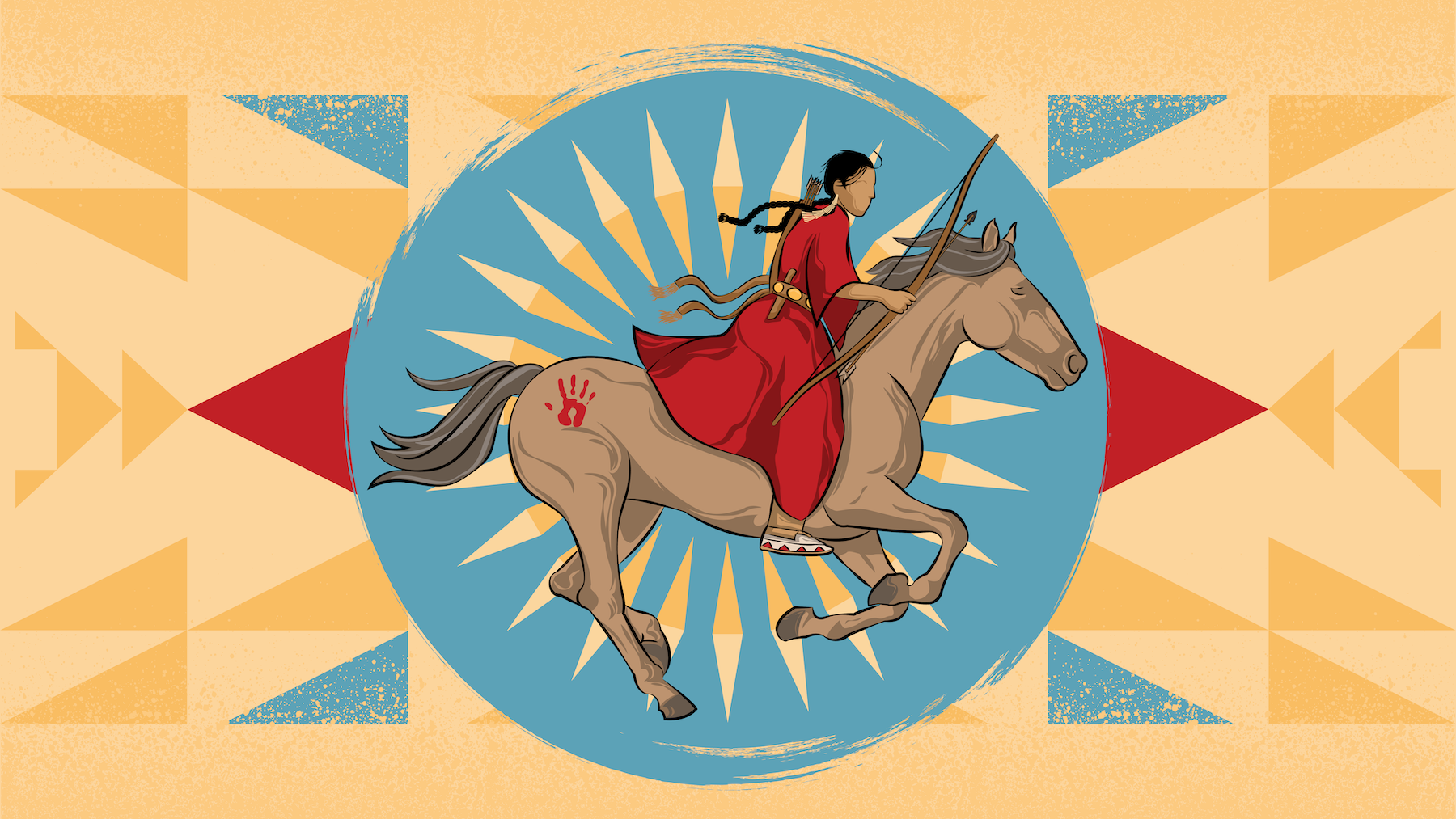
June 25-26, 2026, marks the 150th Anniversary of the Battle of Greasy Grass – an important anniversary for the long lineage of Indigenous resistance on Turtle Island. Also known as the Battle of the Little Bighorn or Custer’s Last Stand, the Battle of Greasy Grass is a day of commemoration to honor when our ancestors and their allies gathered in unity to stand against a common enemy – the United States Army. We were overwhelmingly victorious.
The name Greasy Grass comes from the Lakota and Cheyenne peoples, who referred to the nearby river valley by that name. This battle took place in what is now known as Montana, and included Indigenous Peoples from the Lakota, Northern Cheyenne, and Arapaho Nations.
The Fort Laramie Treaty of 1868, signed 12 years before this battle, stated that the Black Hills and surrounding territories legally belonged to the Tribes. But when miners, settlers, and the U.S. government realized there was gold in the hills, they violated their own treaties and attacked Indigenous Peoples on their own rightful land – all in the name of greed. Military expeditions entered the region as federal officials tried to force Native peoples onto smaller reservations far from the hills, despite the treaty agreements. To weaken these strong tribal nations, the government began intentionally destroying their economic and cultural backbone – the bison herds.
Before settlers began decimating the population, there were 30-60 million bison roaming the plains. By the time Greasy Grass happened, mass commercial hunting had reduced the bison to roughly 3 to 4 million animals. And between 1876 and the 1890s, the U.S. government and profit-driven settlers reduced that already severely reduced population to just a few hundred animals.
Yet many Native families refused to relocate to the reservations, and instead gathered in a large village along the Little Bighorn River, known to them as the Greasy Grass. Well-known Lakota leaders such as Sitting Bull, Crazy Horse, and Gall played important roles in uniting their people and organizing resistance against the U.S. government.
Then on June 25, 1876, Lieutenant Colonel George Armstrong Custer and the 7th Cavalry launched an attack on the village, which had a population of around 7,000 people – the majority of whom were women, children, and elders. But Custer and his scouts underestimated the size and power of the village, and instead found themselves up against one of the largest gatherings of Native warriors ever assembled on the Great Plains. The Lakota, Cheyenne, and Arapaho warriors, including many women warriors, quickly countered the assault. They protected their village while also overwhelming portions of the 7th Cavalry. Custer and more than 200 of his men were killed.
This was a historic victory for Native Nations, their land, and their culture at a time when the federal government was actively breaking treaties and forcing Native people into reservations. The victory at Greasy Grass is also one that belonged to all people, especially the warrior women in the camp. Oral histories from the Battle of the Greasy Grass recount women not only defending the camp, but also taking direct action in the fight against the 7th Cavalry. We often hear stories told of Buffalo Calf Road Woman, who rode alongside her husband in battle. It is in this same warrior spirit that we call upon for the energy, the intention, and the strategy to help us with what we face today as Native Nations. The Battle of Greasy Grass reminds us of the incredible strength we can muster when we stand united as Indigenous Peoples.
We cannot ignore the weight of this moment in time. The 150th commemoration of this collective victory and resistance is unfolding against the backdrop of the United States’ 250th anniversary of the Declaration of Independence, with celebrations of falsified democracy and hollow freedom even louder than usual. This contrast makes us pause to ask ourselves: What do we want the next 250 years to look like for Indigenous people?
Relatives, we have seen what is possible when we come together as Native nations. We saw it in the unity at Pe’ Sla just last month, and in all nine tribes of the Oceti Sakowin passing resolutions to move forward on legislation to return federal land in the Black Hills to its rightful stewards. Though we stand in a different formation than our ancestors did on that battlefield 150 years ago, the roots of that power still flow through our spirits. They are alive within us and in the prayers from our ancestors, and we must draw strength from them to build a world where Indigenous people, and all people, can thrive.
Join us in person in Crow Agency, Montana, or online via livestream June 25-26, at the All Nations 150th Anniversary Commemoration.
See planned events at: https://www.buffalosfire.com/greasy-grass-little-bighorn-150th-schedule
A livestream of the event will be available on: https://landback.org/live/