
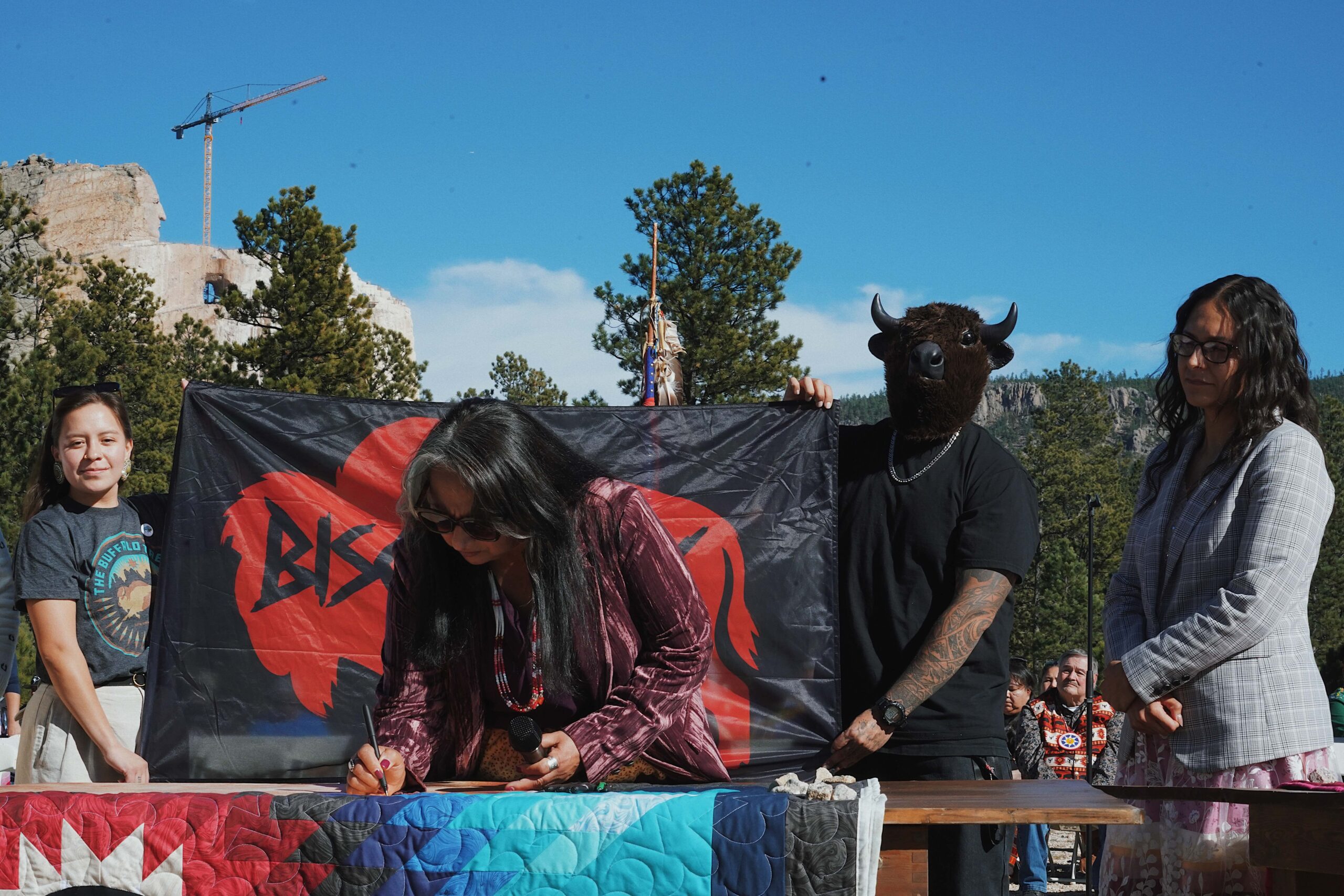
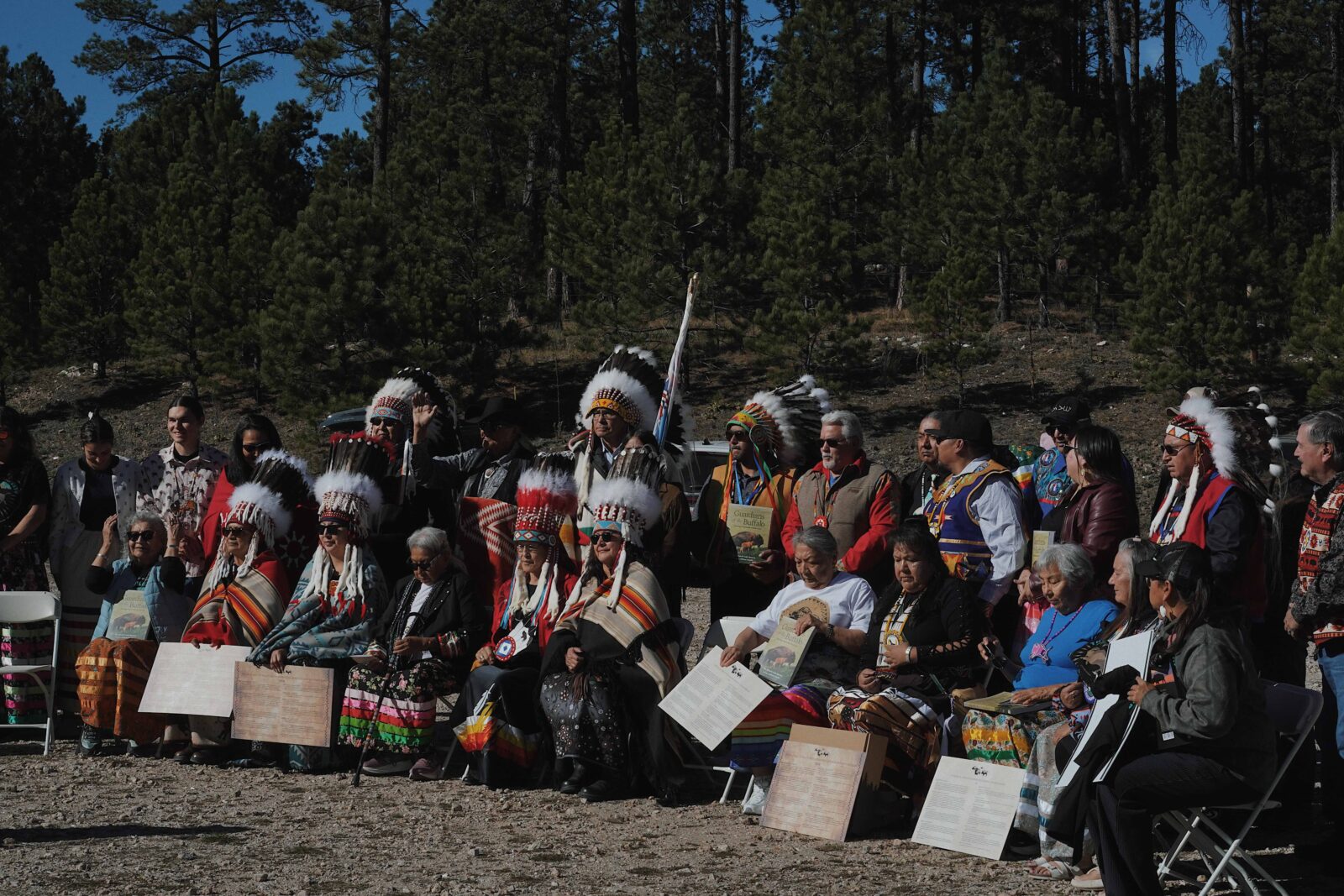
This week, NDN Collective joined Indigenous leaders, Tribal Nations, and Buffalo Treaty Signatories in the He Sapa (the Black Hills) to commemorate the 12th anniversary of the Buffalo Treaty and reaffirm a shared commitment to restoring buffalo/bison (used interchangeably) and the relationships, culture, and ecosystems they sustain. Twenty Tribal Nations and First Nations from across Turtle Island and over 350 individuals were present at the gathering.
By signing the Buffalo Treaty and co-hosting the anniversary gathering, NDN Collective joins a growing intertribal and international movement dedicated to bringing buffalo home to Indigenous lands. The gathering created space for signatories to strengthen relationships, share knowledge, and discuss the work ahead to restore buffalo to their homelands.
Restoring Buffalo, Restoring Relationships
Indigenous Nations first signed the Buffalo Treaty in 2014 at the Blackfeet Reservation in Montana. Over the past decade, the Buffalo Treaty has grown from eight founding signatories to a powerful international alliance of over 50 Nations and Tribes rooted in relationships among Nations, with the land, and with the buffalo. The Buffalo Treaty gatherings are more than ceremonial — they are moments of shared vision, intergenerational learning, and collective commitment to healing.
Since time immemorial, buffalo have sustained Indigenous Peoples through food, clothing, shelter, ceremony, and cultural knowledge. Colonial policies and militia slaughter purposefully disrupted the relationships between buffalo and Indigenous Nations.
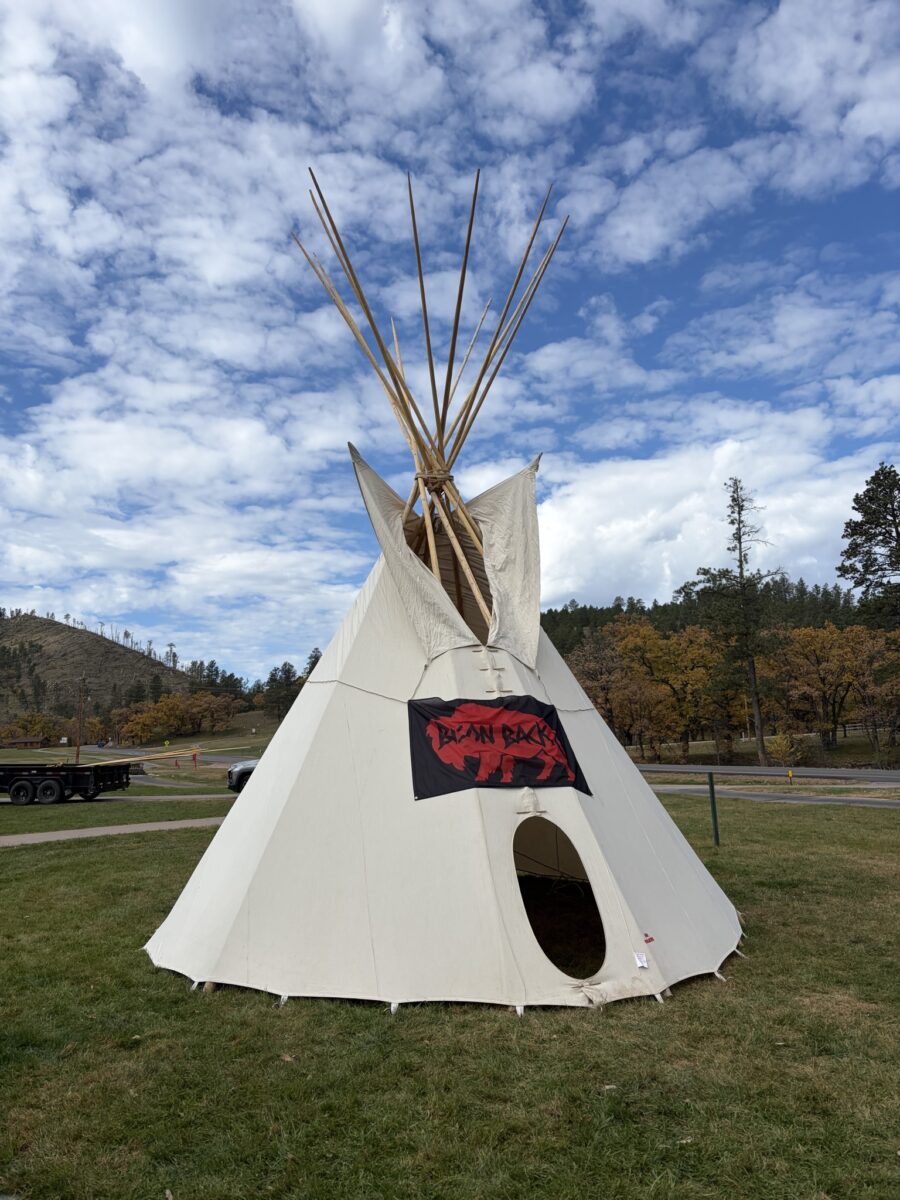
Today, NDN Collective’s Bison Homelands Initiative is striving to create the world’s largest bison corridor spanning over 300,000 acres connecting Wind Cave to the Missouri River. Through grantmaking, NDN Collective has invested over $1.1 million into Indigenous organizations and communities to support their bison restoration efforts. Additionally, NDN Fund made a $1.6 million Regenerative Agriculture/LANDBACK loan to Sacred Storm Buffalo in 2024 to further their mission to foster food sovereignty, family well-being, reconnection to the land, and strengthening workforce development.
NDN Collective affirmed their commitment to the Buffalo Treaty as new signatories on Thursday, October 22, 2026, joining hundreds of others all dedicated to bison restoration efforts spanning from Canada to Mexico.
A Gathering in the He Sapa
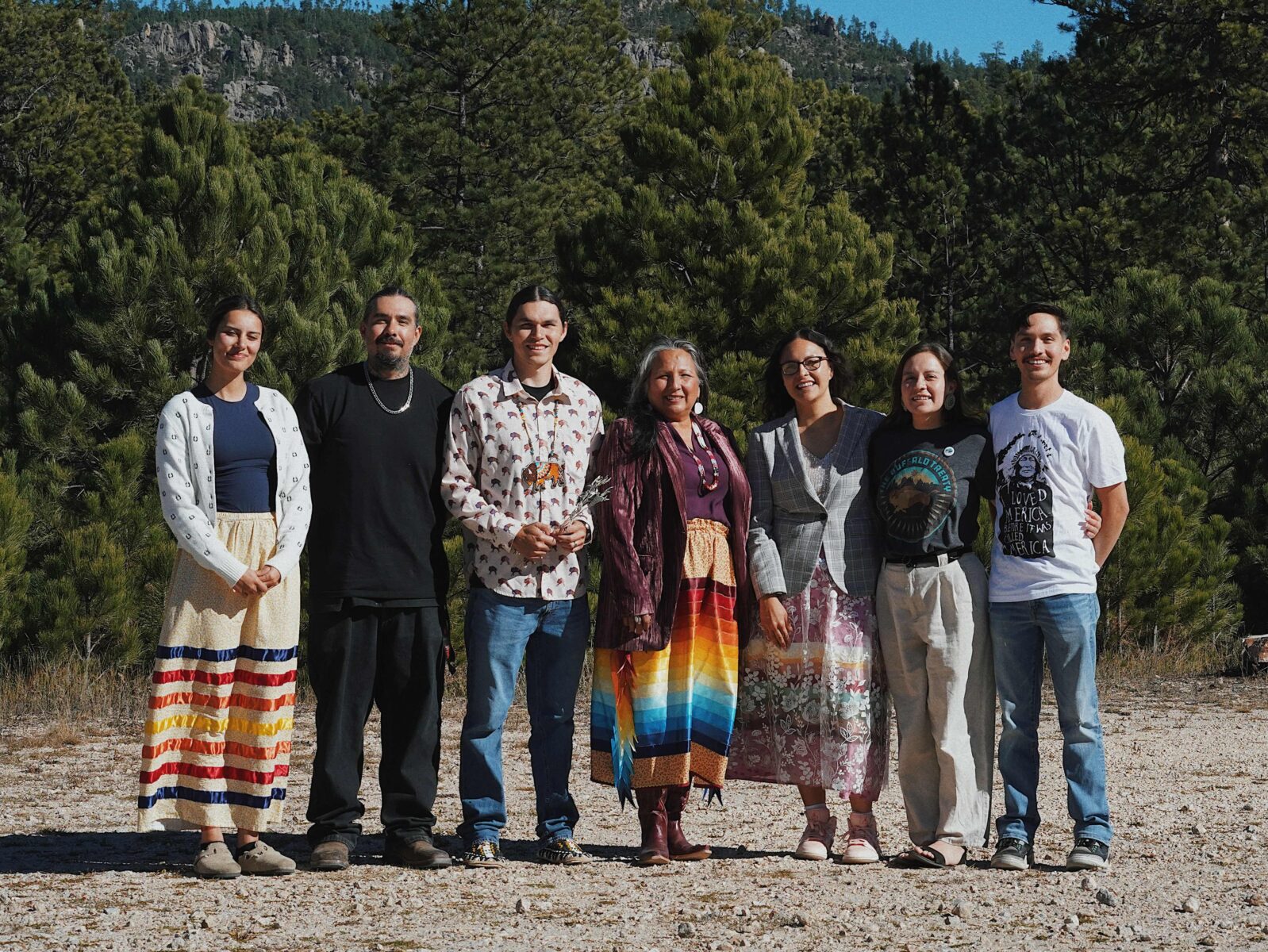
The 12th annual Buffalo Treaty gathering brought signatories and partners together in the He Sapa to reflect on the progress made since the Treaty was first signed in 2014. Through dialogue, knowledge sharing, and relationship-building, participants explored opportunities to strengthen buffalo restoration efforts and address challenges that continue to limit Tribal Nations’ ability to restore and manage buffalo on their own terms. It was powerful to have these discussions together in the He Sapa, which holds deep cultural, spiritual, and historical significance for the Oceti Sakowin and many Indigenous Nations.
The gathering also provided space to discuss policies, land access, and intergovernmental relationships that are necessary to address challenges and advance buffalo restoration. From addressing federal grazing regulations to Tribal sovereignty and food sovereignty, these conversations highlighted the importance of ensuring Tribal Nations have the authority and resources to make decisions grounded in their own values, priorities, and responsibilities. Buffalo restoration is more than bringing an animal back to the land. It is about restoring relationships, exercising Tribal sovereignty, and revitalizing the cultural practices and knowledge systems that have sustained Indigenous peoples since time immemorial.
Strengthening an Intertribal Movement, LANDBACK = Bison Back
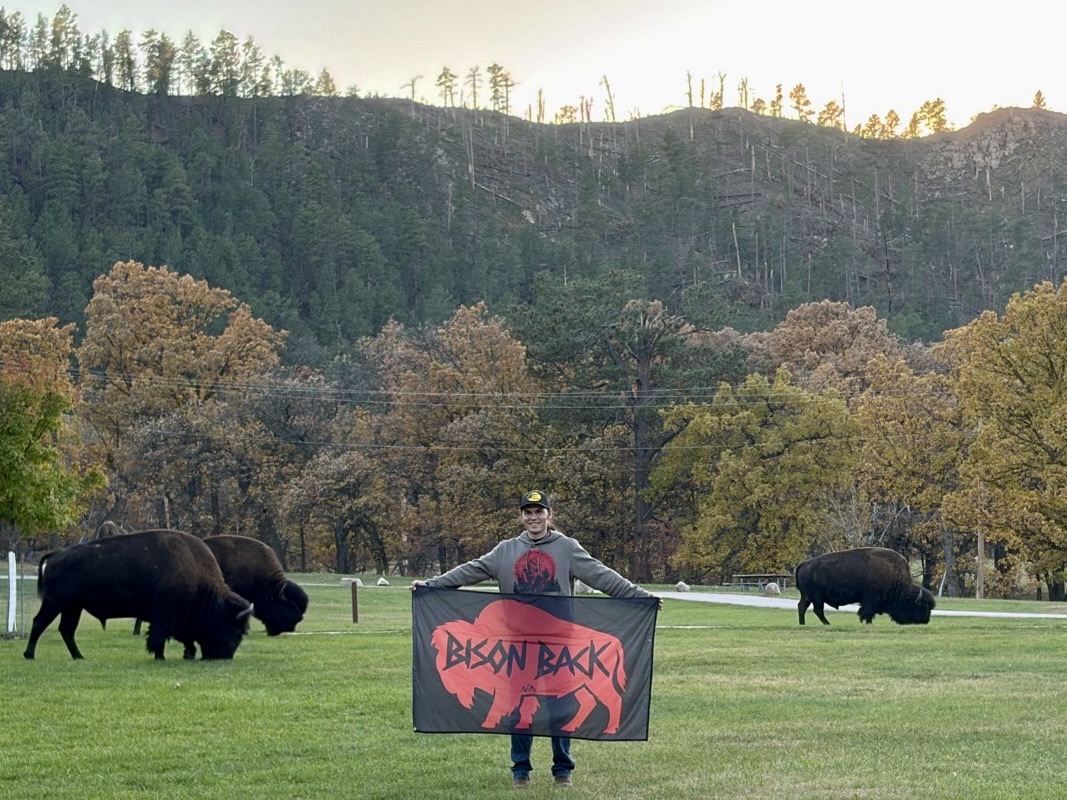
NDN Collective’s commitment to sign the Buffalo Treaty reflects its participation in a broader movement for Indigenous self-determination, cultural revitalization, and the restoration of Indigenous relationships with the land. When we talk about LANDBACK, we must also be talking about land back for our buffalo relations, advocating to re-establish their homelands as well. LANDBACK is bison back. As a co-host of the annual gathering, NDN Collective helped create space for signatories and partners to connect, exchange knowledge, and envision the next chapter of this work.
“Our bison relatives know no borders and neither should our kinship,” said Foster Cournoyer Hogan, Bison Coordinator at NDN Collective, when he welcomed everyone at the gathering.
The gathering reinforced that buffalo restoration cannot be accomplished by any one Nation or organization alone. It requires cooperation among Tribal Nations, Indigenous knowledge holders, buffalo managers, conservation partners, and the institutions responsible for decisions affecting Indigenous lands and resources. It also requires centering Indigenous leadership and recognizing that Tribal Nations are not simply stakeholders in buffalo restoration; they are sovereign Nations with enduring relationships, knowledge, and responsibilities to buffalo.
After signing the Buffalo Treaty on behalf of NDN Collective, Gaby Strong (Vice President of NDN Collective) said, “As we think about the future and leaving something good behind for our thakożapi [grandchildren], all of them in the future, this is part of it. This is part of putting that prayer into action, honoring that relationship with our Oyate, that four-legged that has always taken care of us and shown us how to be as relatives.”
Looking Ahead
As the Buffalo Treaty enters its next chapter, signatories continue to build on more than a decade of shared commitment to buffalo restoration. The work ahead includes advancing Tribal access to land, strengthening Indigenous-led buffalo management, protecting Traditional Ecological Knowledge, and supporting the return of buffalo as a source of cultural, ecological, and nutritional well-being. For Indigenous Nations, restoring buffalo is an act of cultural continuity, a commitment to future generations, and a reaffirmation of Indigenous sovereignty.
The Buffalo Treaty reminds us that when buffalo thrive, our relationships with the land, our cultures, and our communities can thrive alongside them.
A LANDBACK For the People podcast episode about our Bison Homelands Work at NDN Collective will be releasing in the upcoming days. Stay tuned!
You can purchase a NDN Bison Back T-Shirt here. Bison Back flags will be released soon on the NDN Store website!