
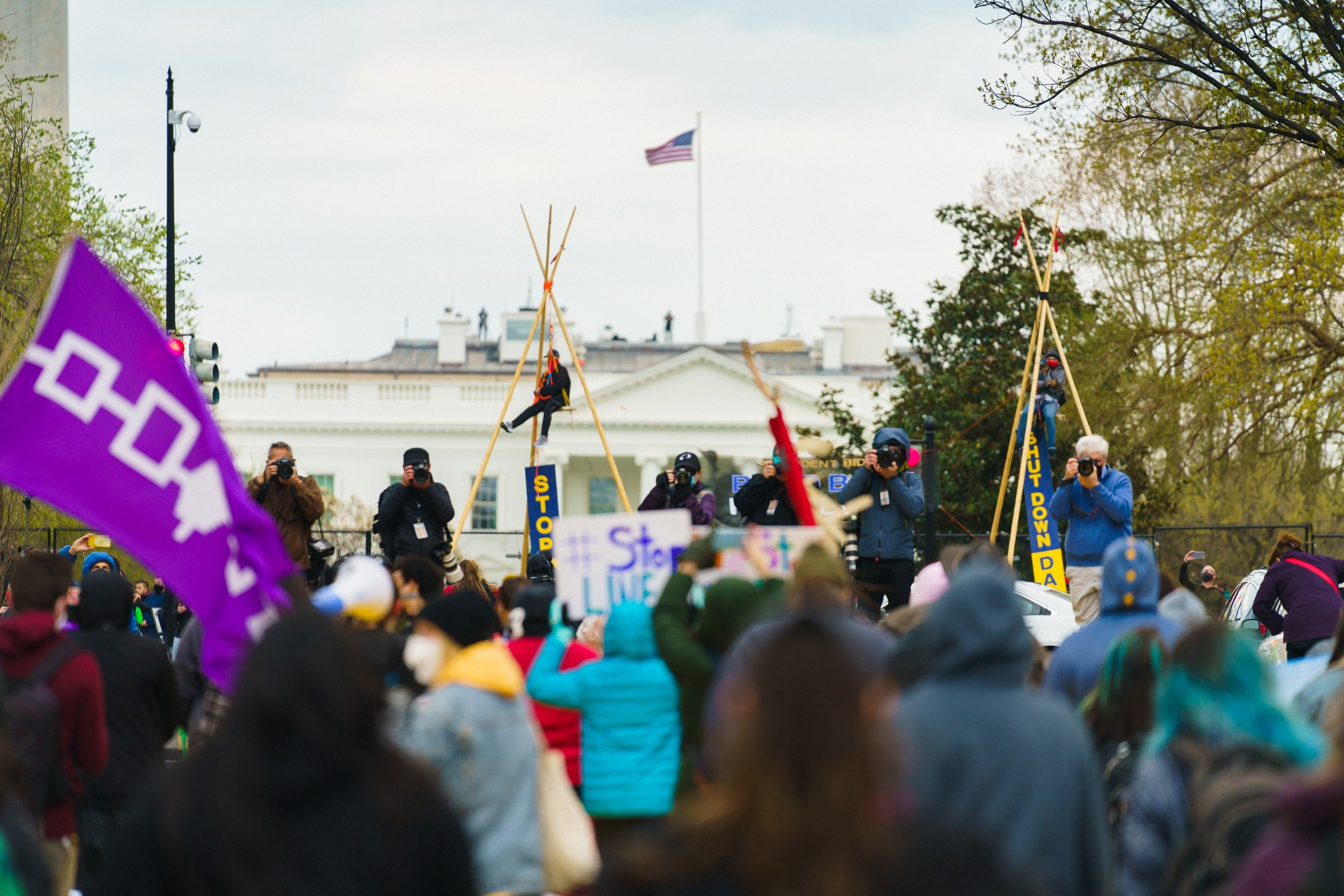
Recently, we shared perspectives from three of our colleagues at NDN Collective about voting as an Indigenous person. With so many differing opinions among our community, it’s important to continue this conversation around how we as Indigenous people engage with voting, especially in the lead-up to November’s midterm elections. By breaking down and reflecting on key moments in the ongoing fight to protect our political rights, we hope to deepen our understanding of how Indigenous Peoples can leverage voting as a tool to build power.
As Indigenous Peoples, our history with democracy, voting systems, and collective decision-making begins much earlier than the establishment of the so-called United States. The Haudenosaunee Confederacy is considered to be the oldest living participatory democracy in the world, and had a significant influence on the U.S. Constitution and government structure. The Confederacy united the Mohawk, Oneida, Onondaga, Cayuga, and Seneca nations – joined later by the Tuscarora, Wyandot, Delaware, and Tutela nations – in an agreement to live under the Great Law of Peace. Brought to the nations by the Peacemaker, the Great Law of Peace is an oral constitution and system of governance that emphasizes decision making by consensus. It is still in use by the Haudenosaunee Confederacy today.
Throughout our history, countless other Indigenous nations had their own governments and methods for making decisions as a community. Matriarchal leadership, representatives appointed through clan systems, and spiritual advisors are a few examples of the diverse ways Indigenous nations governed themselves. While some tribal nations have retained their traditional systems of governance, colonial limitations on tribal sovereignty have forced others to adopt a model more similar to the United States.
Fighting for the Right to Vote
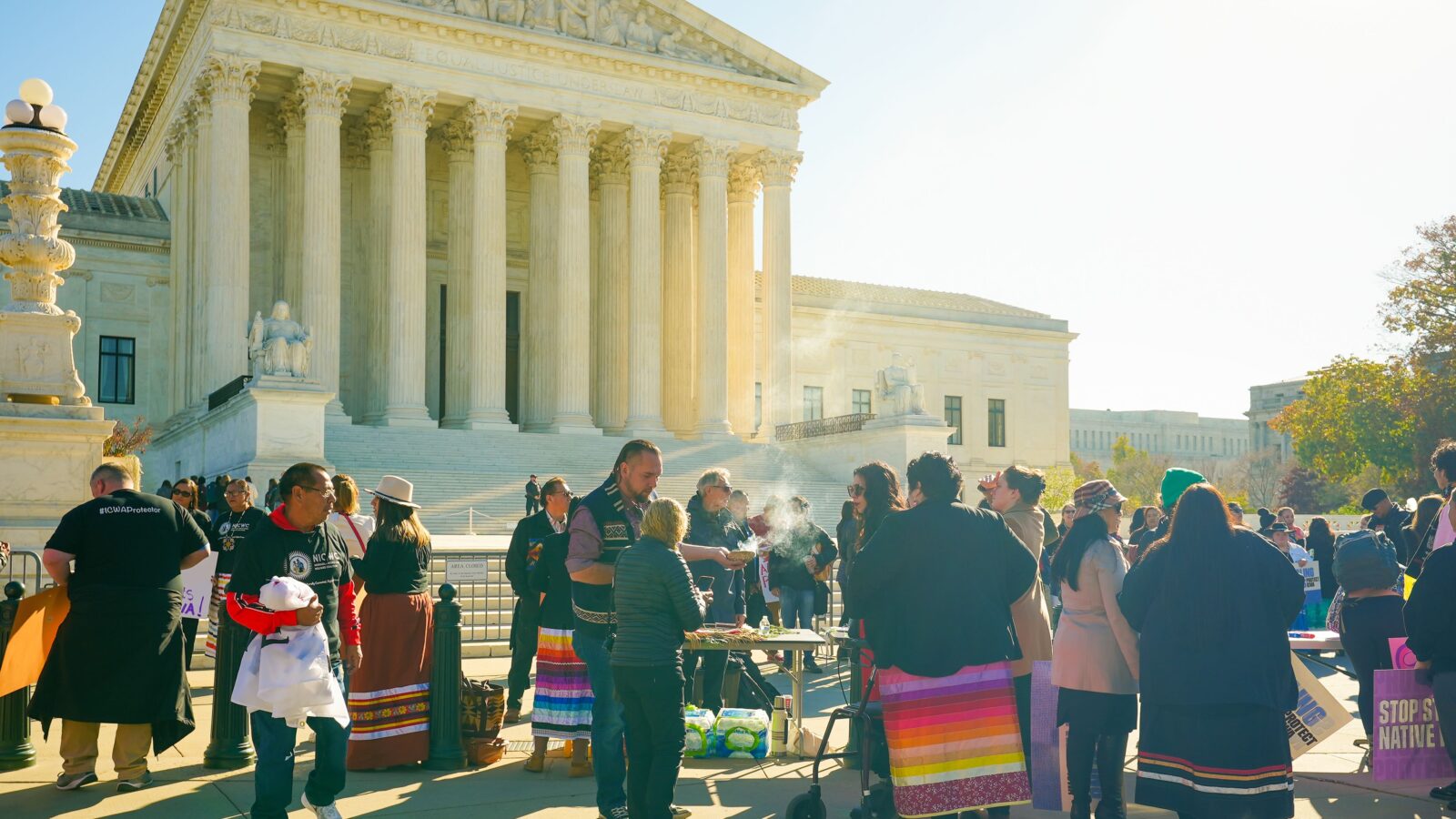
Despite our rich history of decision making and stewardship on these lands since time immemorial, Indigenous Peoples continue to be excluded from civic participation in the United States. Earlier this year, the Supreme Court of the United States undercut the Voting Rights Act with their ruling in Callais v. Louisiana. The 1965 Voting Rights Act protects Black People, Indigenous Peoples, and other people of color from exclusionary voting practices. It is a critical voting safeguard won by the Civil Rights Movement to dismantle Jim Crow policies in the South and other discriminatory structures.
Although the 15th Amendment of the Constitution guarantees that the right to vote cannot be denied on the basis of race and was ratified in 1870, it was not being enforced until the 1965 Voting Rights Act. Callais v. Louisiana guts Section 2 of the Voting Rights Act, which allows districting maps to be legally challenged if they disenfranchise voters. The Supreme Court’s decision means that people cannot rely on federal courts to uphold or enforce the Voting Rights Act, and it lets states continue gerrymandering (drawing electoral district boundaries to give a political party an unfair advantage).
This isn’t the first time that the Voting Rights Act has been disputed. In 2022, the Turtle Mountain Band of Chippewa Indians, Spirit Lake Tribe, and three Native American voters filed a federal lawsuit challenging North Dakota’s 2021 state legislative redistricting plan. The suit claimed that the plan dilutes the voting strength of Native American voters, in violation of Section 2 of the Voting Rights Act. A district court ruled that the map did violate the Voting Rights Act, but that decision was ultimately vacated due to the outcome of Callais v. Louisiana.
In 2013, the Supreme Court struck down other key parts of the Voting Rights Act, effectively allowing states to enact voting laws that make it harder for Indigenous Peoples, Black People, and other people of color to vote. We’ve been witnessing a wave of states restricting voters through more stringent photo ID requirements, difficult voter registration procedures, and reduced early voting options. During the 2018 election cycle, North Dakota made national headlines after passing a law requiring voters to present identification that lists their residential street address. This law prevented many Indigenous people living on reservations in North Dakota from voting due to the state’s failure to assign residential addresses to homes on reservations. In April 2020, the Spirit Lake Nation and Standing Rock Sioux Tribe filed a binding agreement with the state of North Dakota that strengthens protections for Indigenous Peoples’ right to vote. This agreement provides a pathway for Indigenous people who don’t have or know their residential address to vote, and ensures that tribal IDs and tribally designated street addresses are accepted as valid.
Indigenous Peoples and U.S. Citizenship
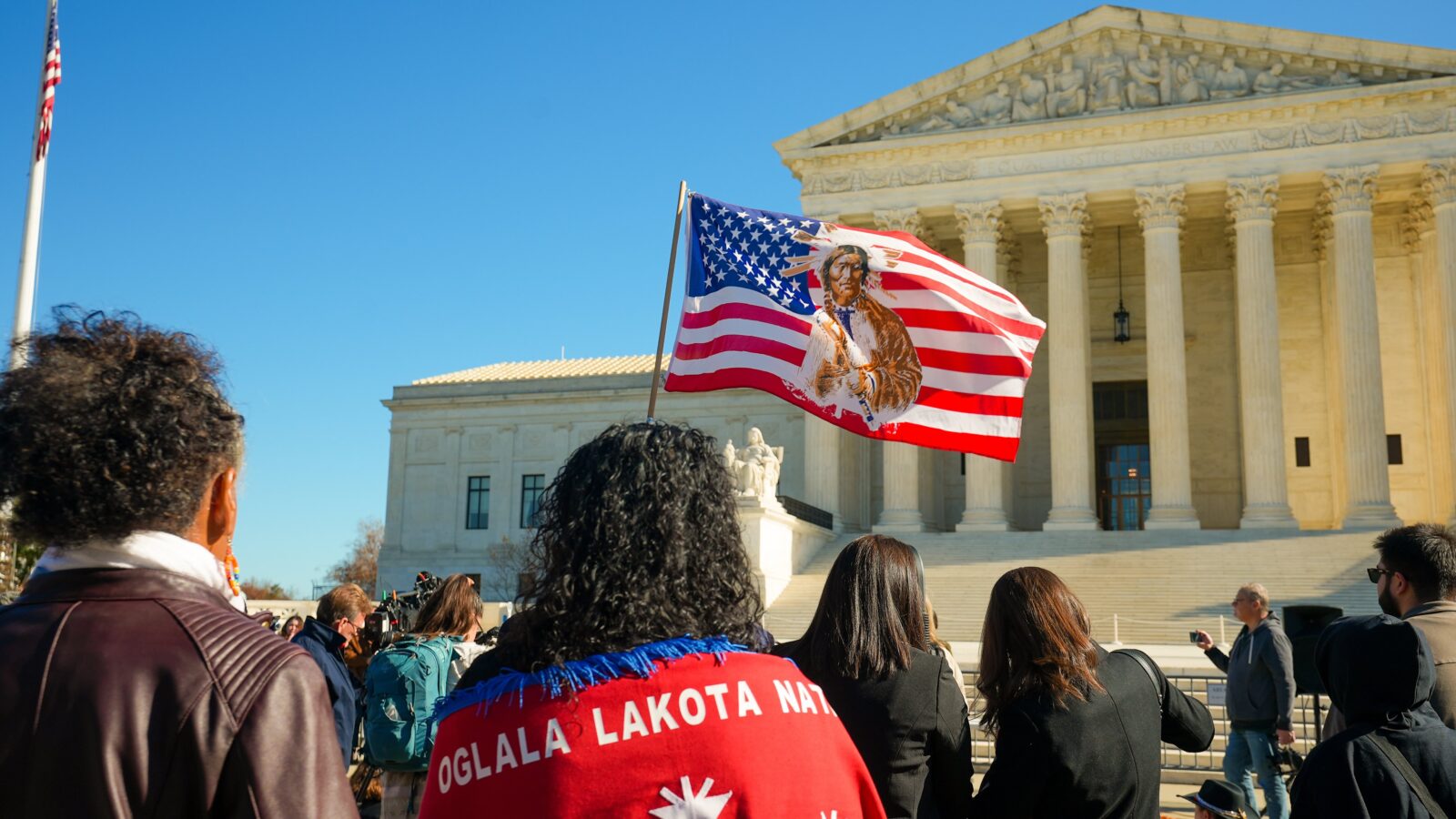
The United States government fighting against voting rights isn’t new or surprising – it is a way to systemically oppress Indigenous Peoples, Black People, and other people of color. Indigenous Peoples were not always recognized as citizens of the United States; it wasn’t until 1924 that Indigenous Peoples were granted United States citizenship and their right to vote was reinforced by the Indian Citizenship Act. However, many Indigenous Peoples did not consent to having citizenship or want citizenship with the nation that continued to break treaties and commit genocide against their communities. The U.S. declared independence from Great Britain based on “no taxation without representation,” establishing the principle that many Indigenous people hold: we are sovereign, but because the U.S. government taxes us, we get to vote in U.S. elections.
The Fourteenth Amendment was ratified in 1868 and granted citizenship to anyone who was born in the United States, but Indigenous Peoples living in tribal communities were explicitly excluded from birthright citizenship. In the 1884 case Elk v. Wilkins, the Supreme Court cemented that Indigenous Peoples did not have birthright citizenship. This decision also created a legal precedent that citizenship wasn’t a Constitutional guarantee, but instead required Congressional approval. We continue to see the consequences of Elk v. Wilkins today, as the current administration tries to strip people of their birthright citizenship. On the first day of his second term, Trump signed an executive order which sought to take away U.S. citizenship from American children born to undocumented parents. The ACLU and partners challenged the executive order in Trump v. Barbara, and the Supreme Court ruled that it was unconstitutional in June 2026.
Know Your Rights and Educational Resources
When we have conversations about voting as Indigenous Peoples, we know that there are centuries of history that weigh on our communities. There is no straightforward answer on how to engage with a political system that has attempted to exclude us, our Black relatives, and other people of color through legislation and violence. We reflect on the work that our ancestors have done to make their voices heard at the polls, in their communities, and on the frontlines, and let that guide us. Voting can be a tool that we use to exercise our collective power and sovereignty as Indigenous Peoples. Make sure that you know your rights when voting ahead of the midterm elections (we have a toolkit you can use available, along with other voting and policy resources). You can read about the work Native American Rights Fund is doing to protect Indigenous rights, resources, and lifeways by visiting their website. And, you can learn more about the true history of democracy with the First America Podcast.
Native Voting Rights Timeline at a Glance
- 2026, April 29 → U.S. Supreme Court guts Section 2 of the Voting Rights Act with their ruling in Callais v. Louisiana. (Learn more)
- 2022 → The Turtle Mountain Band of Chippewa Indians, Spirit Lake Tribe, and three Native American voters file a federal lawsuit challenging North Dakota’s 2021 state legislative redistricting plan. The suit claimed that the plan unlawfully dilutes the voting strength of Native American voters, in violation of Section 2 of the Voting Rights Act. (Learn more)
- 2020 → Spirit Lake Nation and Standing Rock Sioux Tribe file a binding agreement with the state of North Dakota that provides key voting safeguards for Indigenous Peoples, including a pathway to vote without a residential street address and acceptance of tribal IDs and tribally designated street addresses as valid forms of identification. (Learn more)
- 2018 → North Dakota passes law requiring voters to present identification that lists their residential street address, which disenfranchised Native voters living on reservations. (Learn more)
- 2013 → U.S. Supreme Court strikes down parts of the Voting Rights Act.
- 1975 → The Voting Rights Act is amended with the addition of Section 203, which requires jurisdictions with a significant population of non-English speakers to provide voters with election materials in their own languages. (Learn more)
- 1970 → Native American Rights Fund is founded to protect Native American rights, resources, and lifeways through litigation, legal advocacy, and legal expertise.
- 1965, August 6 → The Voting Rights Act of 1965 outlaws exclusionary practices that “deny or abridge the right of any citizen of the United States to vote on account of race or color.”
- 1924, June 2 → The Indian Citizenship Act is signed into law, granting U.S. citizenship to Native people.
- 1884 → Native citizenship denied in Elk v. Wilkins Supreme Court Ruling. (Learn more)
- 1870 → 15th Amendment to the U.S. Constitution is ratified.
- 1868 → 14th Amendment to the U.S. Constitution is ratified.
- 1778, June 21 → The Constitution is ratified. Because it did not establish specific voting rights, states were given the power to regulate voting laws. As a result, in most states, only white property-owning adult men had the right to vote.
- 1722 → The Tuscarora nation joins the Haudenosaunee Confederacy.
- 1142 → The year that some estimate the Haudenosaunee Confederacy was formed. Indigenous Peoples know the date to be earlier.