
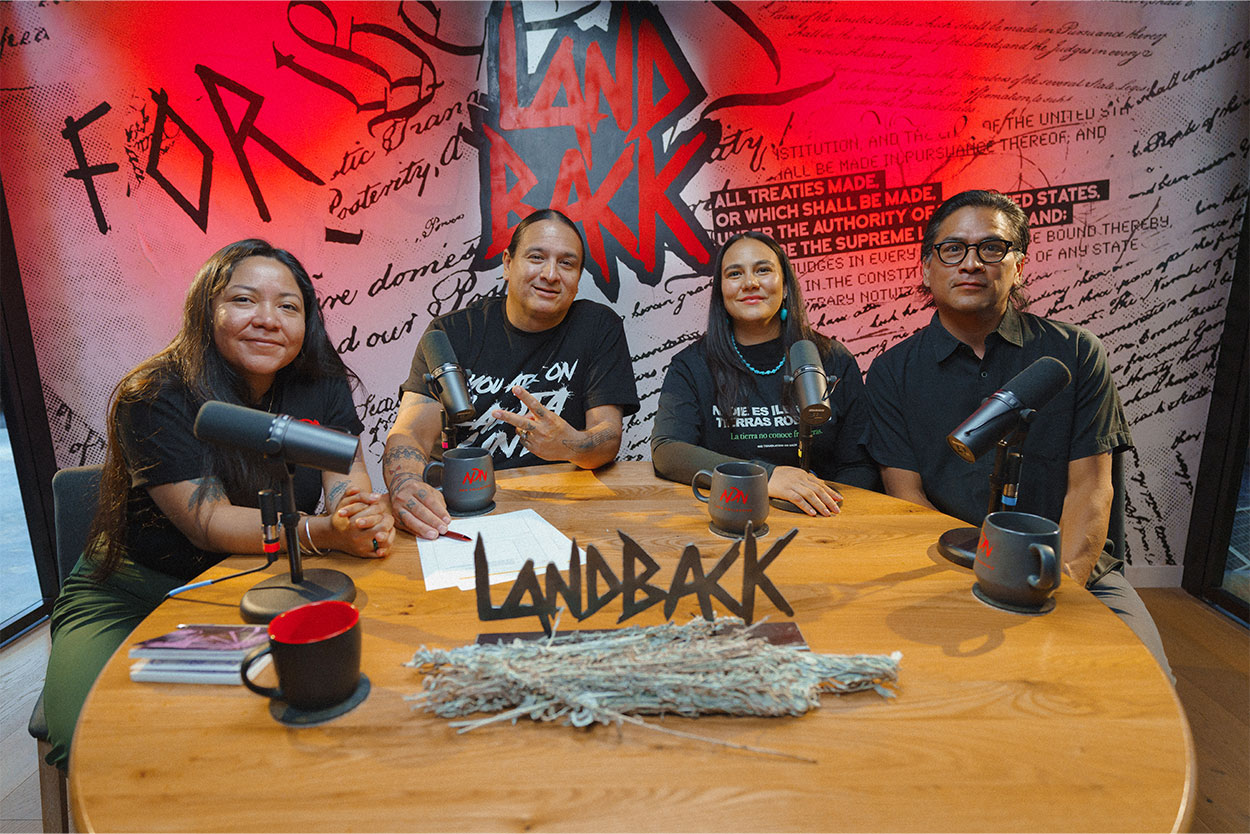
In Season 4, Episode 6 of the LANDBACK For The People podcast, we have an exciting announcement to share with all our relatives. NDN Collective CEO and Founder, Nick Tilsen, invited NDN Collective staff Nicole Yanes, Director of Membership, Eva Cardenas, Director of Organizing, and Cy Wagoner, Director of LANDBACK Action Network, to announce the launch of the LANDBACK Action Network (LAN). LAN is a new membership-based organizing network advancing the LANDBACK movement that brings together Indigenous Peoples, Nations, accomplices, and organizations to build collective power. Nick also speaks with Cy, Eva, and Nicole about their path to organizing work, how being part of the LANDBACK movement can create a political identity for Indigenous peoples, and what LANDBACK means to them.
Journey to Movement Work
The conversation starts with Nick asking Cy, Nicole, and Eva how they got involved in the movement work. Across each of their answers, we are reminded of how many of us end up as organizers simply because we love our communities and want better conditions for our families.
Cy shared how he first got involved in organizing around access to clean water with the Black Mesa Water Coalition after he unexpectedly returned home to the Navajo reservation after leaving for college. Fighting for water rights on the reservation was personal. “That really brought the fight home,” he explained. “Like home beneath my feet, the water beneath my feet, and access to water. Because at the time we were still hauling water – we didn’t have any plumbing, and it was just our normal life.”
Nicole shared that she learned about mutual aid at a young age from her parents. Growing up on the increasingly militarized U.S.–Mexico border, she watched them support others in their community who could not cross the border themselves. She began organizing in high school to support her community, and after achieving a win, she saw what was possible when people mobilized around a common cause. Reflecting on organizing as a teenager, she shared, “That’s what I like about those ages around 17, things are possible. I think we don’t have all those limitations sometimes, when we think, it is ‘Let’s just do it’. And then you have a win, and you’re like, ‘Oh, we can create change’.”
Organizing for LANDBACK
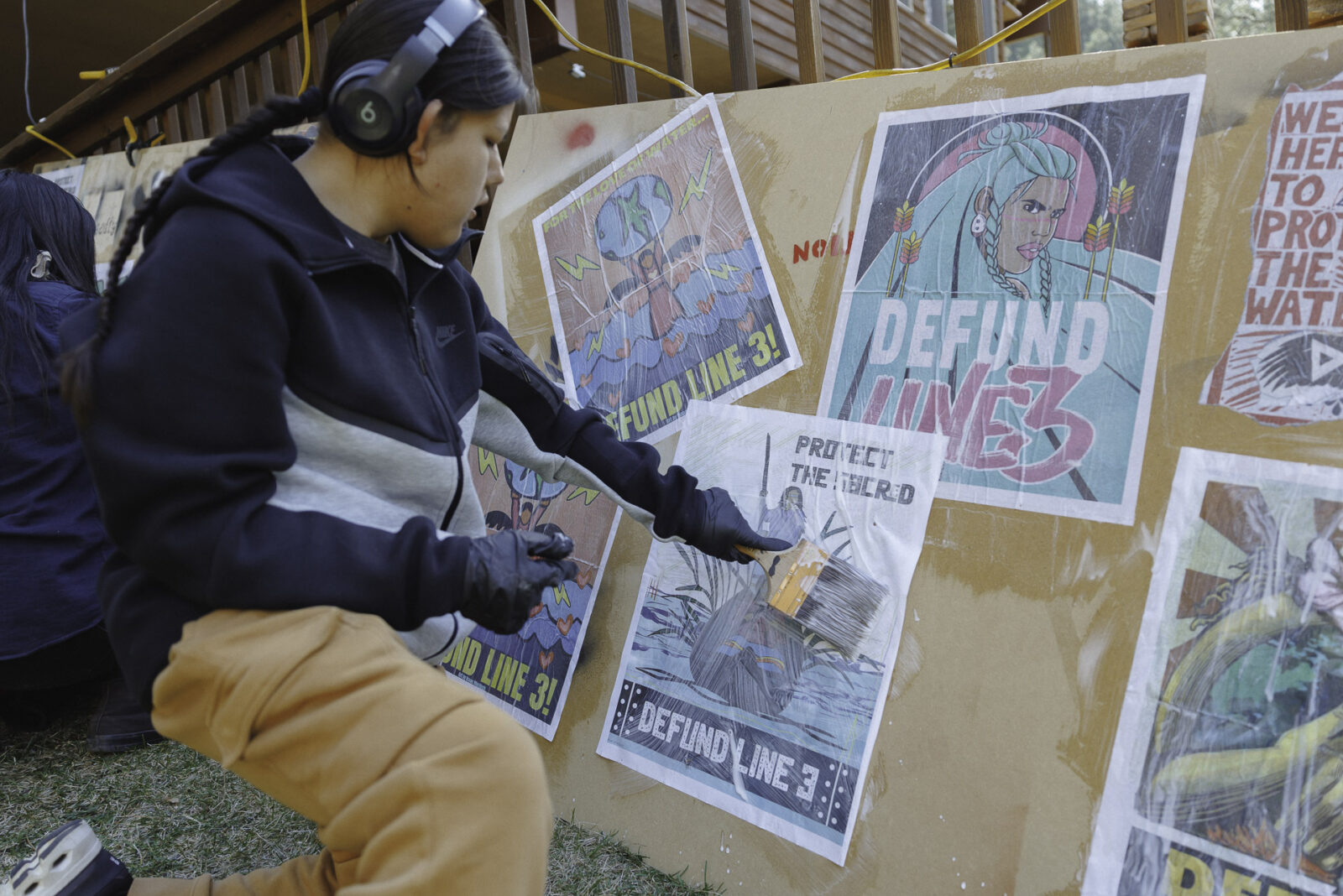
When Nick asked them about how framing Indigenous organizing under LANDBACK had affected the movement, it sparked a conversation about how organizing using this framework creates a political identity for Indigenous peoples. Cy shared how when Indigenous people organize under a LANDBACK framework, it calls them back into a reciprocal relationship with the land. “In my language, in my tradition, the different parts – the mountain, the river, the land below, the water below – we have direct relations. Like mother, like brother, like sister, like grandfather, grandmother,” he explains. “And so when you say the ‘landback’ to an elder, they get it. They understand.’”
Eva answered, “When we talk about LANDBACK, we’re trying to provide people a different framework of understanding and remembering the relationship to the land and why it’s important for us to defend land. Not because we own land, but because we are part of it, and there is a specific mandate that all of us, whether we want to acknowledge it or not, are dependent on land.” She also shared about how LANDBACK provides the opportunity for people to question the contradictions that they see in their everyday struggles. She outlined how the government wants us to think that it has the solutions, when it is actually the one creating the problems. But with LANDBACK, we are seeing Indigenous Peoples recognize these contradictions and tap into our ancestral knowledge to find solutions to the challenges we are facing.
What does LANDBACK mean to you?
Posed with the question of what LANDBACK means to him, Cy explains that he views it as an ongoing dialogue that is led by Indigenous peoples, but that benefits everyone. “It’s a conversation that we have to have with our close loved ones: our mom, our father, our siblings, our immediate families, but also the people that we call friends,” he explains. “Also, it doesn’t stop at land,” he says. “It’s also waterback. It’s also riverback, mountains, it’s the air that we breathe.” In other words, it is a movement where there is room for everyone who wants to join the fight.
When Eva thinks of what LANDBACK means to her, she identifies it as a responsibility and a reminder of our collective fight for liberation. A fight not just for the present, but for the future of our children and our children’s children. “I see it as a promise. I see it as hope,” she explains. “And I see it as sort of those little embers that you see in that fire that are constantly burning. They might be little. People might think that they’re just little embers, but if you catch enough of them, you can light fires. Big ones.”
A New Network for the LANDBACK Movement
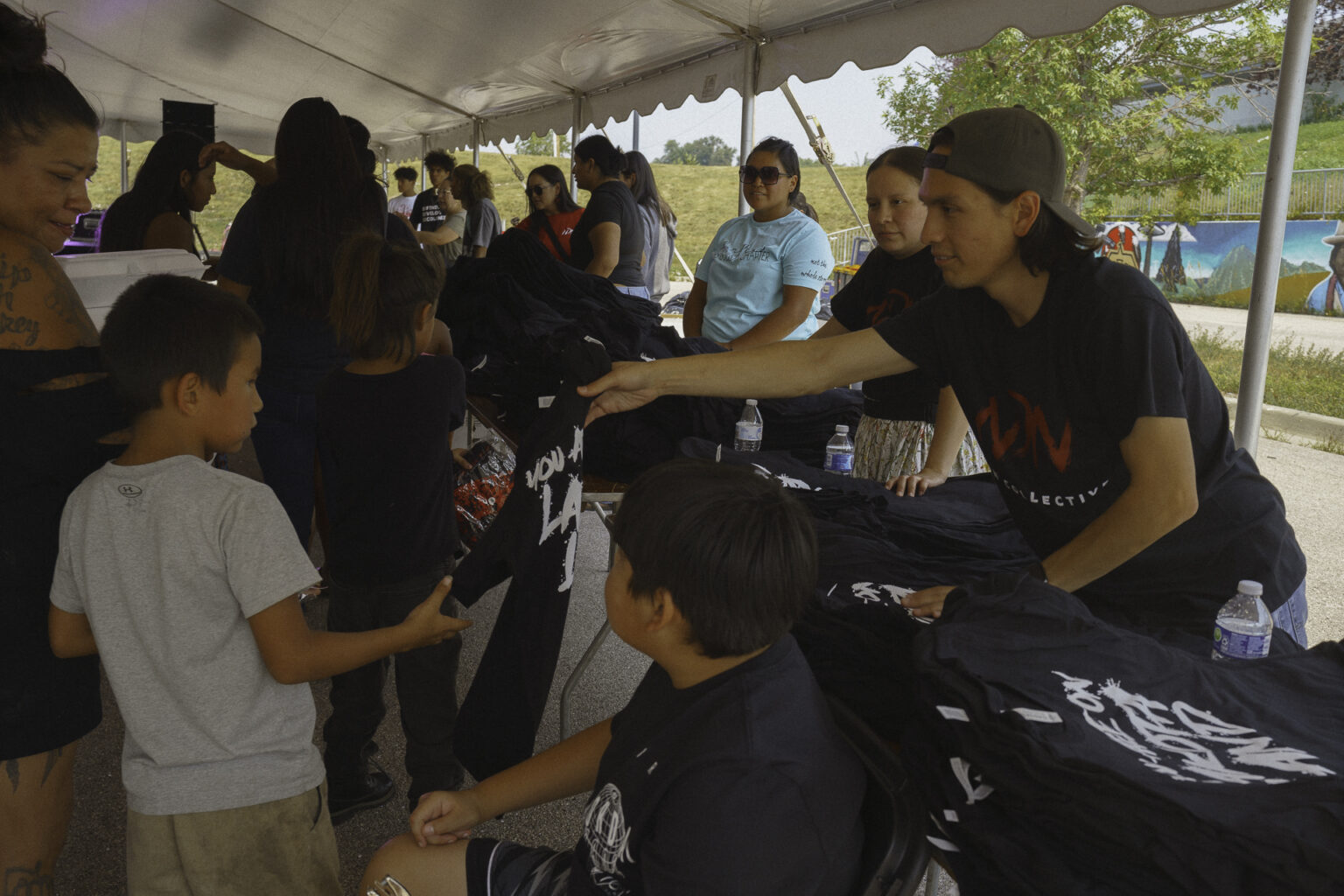
To continue to provide support and infrastructure for the LANDBACK movement, NDN Collective is excited to announce the launch of the LANDBACK Action Network (LAN)! Officially launched on the first day of Earth Week 2026, LAN is a network of people who are organizing in the LANDBACK movement across Turtle Island. The goal of the network is to provide infrastructure that allows organizers in this movement to connect, collaborate, train, and learn with each other.
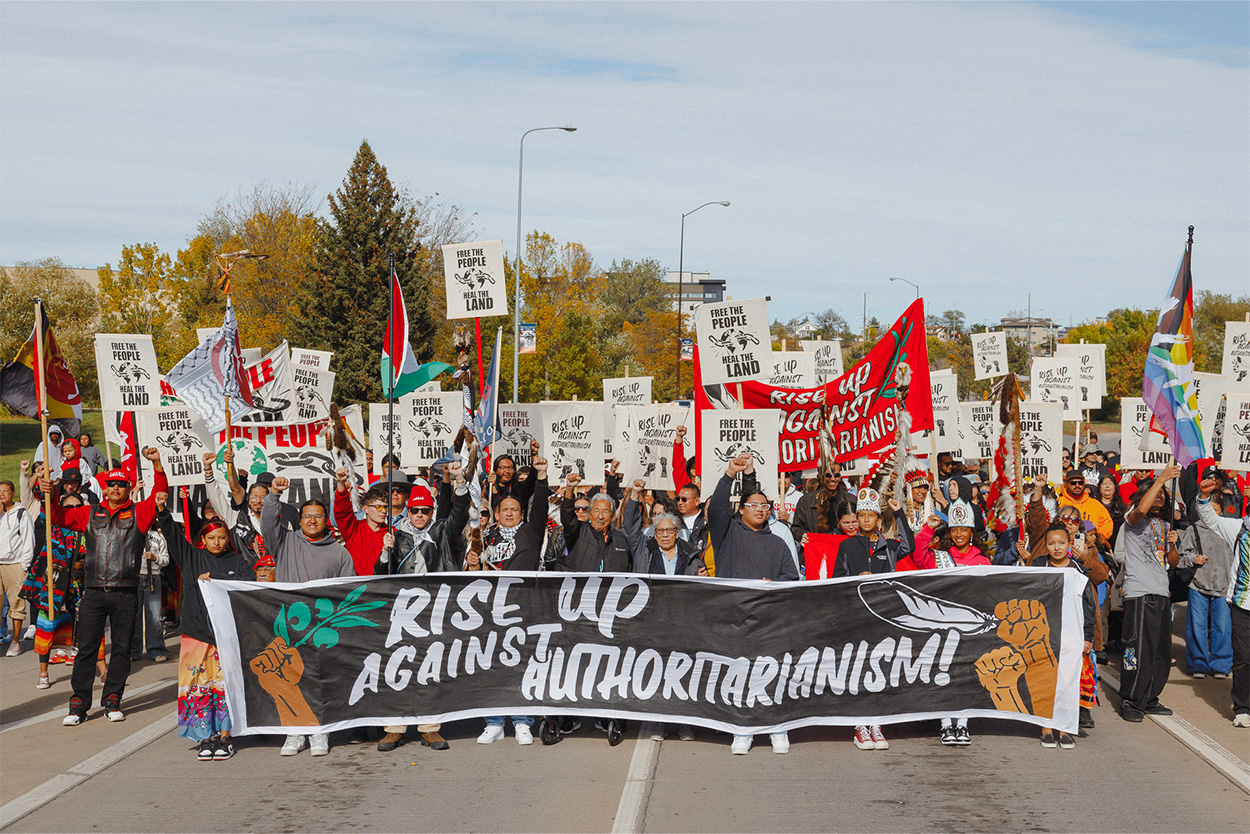
“When I think about networks, it’s made by people. It’s decentralized power,” explained Nicole, “It’s who is part of the network and what we do with it.” In a time when the people who benefit from authoritarianism, colonialism, and exploitation are trying to fragment our efforts, LAN is one way we are trying to combat the attempts to isolate us from one another. LAN is a tool to stand together in our collective power for LANDBACK.
Eva also spoke about how LAN can help us create stronger organizing formations. “Yes, we want to create that political home. We’re also thinking about it strategically,” she expanded. “How are we utilizing this new formation as a vehicle to get us closer to our liberation?”
LAN will work to activate and connect over 1,400 Indigenous Peoples, Nations, and organizations with which NDN Collective has built relationships over the past seven years, with the potential to grow and flourish across the globe. In addition to providing a place for connection, it will also have a large focus on training and skill sharing. Cy shared, “There are a lot of people that are doing this for the first time, so you don’t need to be an expert to come in. It’s a classroom to be a part of.” He explained that the goal is to teach people skills and show them how they can make a difference with those skills and by standing in solidarity with their community. “It’s not a new organization,” emphasized Nick, “it is a political formation of our people: human beings, and Tribal Nations, collectives, all just networked with one another to build our collective power.”
In addition to this membership-driven network, landback.org will serve as the public face for the network. This new site will be the storytelling platform for the LANDBACK movement and feature stories, updates, information, and calls to action from members of the LANDBACK Action Network. As Nick shares, having landback.org means that those involved in LAN can tell their own stories in their own way.
Those interested in joining the LANDBACK Action Network can find more information and apply for membership at landback.org.
Watch the full podcast episode below or listen on your preferred podcast platform.
Red de Acción LANDBACK: Movilizando a los Pueblos Indígenas y Resistiendo el Autoritarismo
En la Temporada 4, Episodio 6 del podcast LANDBACK For The People, (Tierra y Libertad para el Pueblo) tenemos un anuncio importante para compartir con todas y todos nuestros familiares y comunidades. Nick Tilsen, director ejecutivo y fundador de NDN Collective, invitó a Nicole Yanes, directora de Membresía; Eva Cardenas, directora de Organización; y Cy Wagoner, director de LANDBACK Action Network, para anunciar el lanzamiento de la LANDBACK Action Network (LAN). LAN es una nueva red de organización basada en membresía que impulsa el movimiento LANDBACK y reúne a Pueblos Indígenas, Naciones, cómplices y organizaciones para construir poder colectivo. Nick también conversa con Cy, Eva y Nicole sobre su camino hacia el trabajo organizativo, sobre cómo formar parte del movimiento LANDBACK puede crear una identidad política para los Pueblos Indígenas, y sobre lo que LANDBACK significa para cada uno de ellos.
Camino hacia la organización comunitaria
La conversación comienza con Nick preguntando a Cy, Nicole y Eva cómo se involucraron en el trabajo de movimiento. A lo largo de sus respuestas, se nos recuerda cuántas personas terminamos convirtiéndonos en organizadoras y organizadores simplemente porque amamos a nuestras comunidades y queremos mejores condiciones para nuestras familias.
Cy compartió que comenzó a involucrarse en la organización comunitaria en torno al acceso al agua limpia con la Black Mesa Water Coalition, después de regresar inesperadamente a casa, a la reservación navajo, tras haberse ido a la universidad. La lucha por los derechos al agua en la reservación era algo personal:
“Eso realmente hizo que la lucha se sintiera en casa”, explicó. “Como el hogar bajo mis pies, el agua bajo mis pies, y el acceso al agua. Porque en ese tiempo todavía acarreábamos agua; no teníamos tuberías, y era simplemente nuestra vida normal”.
Por su parte, Nicole compartió que aprendió sobre el apoyo mutuo desde muy joven gracias a sus padres. Al crecer en la frontera entre Estados Unidos y México, cada vez más militarizada, vio cómo apoyaban a otras personas de su comunidad que no podían cruzar la frontera por sí mismas. Comenzó a organizarse desde la preparatoria para apoyar a su comunidad y, después de lograr una victoria, vio lo que era posible cuando la gente se moviliza en torno a una causa común. Al reflexionar sobre su experiencia organizando cuando era adolescente, compartió:
“Eso es lo que me gusta de esas edades, alrededor de los 17: las cosas son posibles. Creo que a veces no tenemos todas esas limitaciones; cuando pensamos, es como: ‘simplemente hagámoslo’. Y luego consigues una victoria y dices: ‘Ah, sí podemos generar cambio’”.
Organizarse desde el enfoque LANDBACK
Cuando Nick les preguntó cómo había impactado al movimiento el hecho de enmarcar la organización Indígena bajo LANDBACK, eso abrió una conversación sobre cómo organizarse desde este marco crea una identidad política para los Pueblos Indígenas. Cy compartió que, cuando los Pueblos Indígenas se organizan bajo un marco de LANDBACK, eso los llama de nuevo a una relación recíproca con la tierra.
Cy explicó que organizarse desde LANDBACK implica reconectar con la relación ancestral con la tierra:
“En mi idioma, en mi tradición, las distintas partes —la montaña, el río, la tierra de abajo, el agua de abajo— tienen relaciones directas con nosotros. Como madre, como hermano, como hermana, como abuelo, como abuela”, explica. “Y entonces, cuando le dices ‘landback’ a una persona mayor, lo entiende. Lo comprende”.
Eva agregó:
“Cuando hablamos de LANDBACK, estamos tratando de ofrecer a la gente otro marco para entender y recordar la relación con la tierra y por qué es importante para nosotras y nosotros defenderla. No porque la tierra nos pertenezca, sino porque somos parte de ella, y existe un mandato específico: todas y todos, queramos reconocerlo o no, dependemos de la tierra”.
También señaló que este enfoque ayuda a cuestionar las contradicciones del sistema: muchas veces los gobiernos se presentan como la solución, cuando en realidad son parte del problema. Frente a eso, LANDBACK impulsa a los Pueblos Indígenas a retomar conocimientos ancestrales para enfrentar los desafíos actuales.
¿Qué significa LANDBACK?
Para Cy, LANDBACK es un diálogo continuo liderado por Pueblos Indígenas, pero que beneficia a toda la sociedad:
“Es una conversación que tenemos que tener con nuestros seres queridos más cercanos: nuestra madre, nuestro padre, nuestros hermanos, nuestras familias inmediatas, pero también con la gente a la que llamamos amistades. Además, no se detiene en la tierra. También es waterback. También es riverback, montañas, es el aire que respiramos”.
En otras palabras, es un movimiento incluyente, con espacio para todas las personas que quieran sumarse a la lucha.
Cuando Eva piensa en lo que LANDBACK significa para ella, lo identifica como una responsabilidad y como un recordatorio de nuestra lucha colectiva por la liberación. Una lucha por el presente, pero también por el futuro de nuestras hijas, hijos, y de las generaciones que vienen después:
“Yo lo veo como una promesa. Lo veo como esperanza. Y lo veo como esas pequeñas brasas que ves en el fuego y que siguen ardiendo todo el tiempo. Pueden ser pequeñas. La gente puede pensar que son apenas unas brasitas, pero si reúnes suficientes, puedes encender fuegos. Grandes”.
Una nueva red para el movimiento LANDBACK
Para seguir brindando apoyo e infraestructura al movimiento LANDBACK, NDN Collective se complace en anunciar el lanzamiento de la LANDBACK Action Network (LAN). Lanzada oficialmente el primer día de la Semana de la Tierra 2026, LAN es una red de personas que se están organizando dentro del movimiento LANDBACK en toda Turtle Island (América del Norte). El objetivo de la red es ofrecer una infraestructura que permita a las y los organizadores de este movimiento conectarse, colaborar, capacitarse y aprender entre sí.
Nicole explicó:
“Cuando pienso en las redes, pienso en algo hecho por la gente. Es poder descentralizado. Depende de quiénes forman parte de la red y de lo que hacemos con ella”.
En un momento en que quienes se benefician del autoritarismo, el colonialismo y la explotación intentan fragmentar nuestros esfuerzos, LAN es una de las formas en que estamos tratando de combatir esos intentos de aislarnos unas personas de otras. LAN es una herramienta para mantenernos juntas y juntos en nuestro poder colectivo por LANDBACK.
Eva añadió que la red también busca fortalecer la organización estratégica:
“Sí, queremos crear ese hogar político. También lo estamos pensando estratégicamente. ¿Cómo estamos utilizando esta nueva formación como un vehículo que nos acerque más a nuestra liberación?”.
LAN trabajará para activar y conectar a más de 1,400 Pueblos, Naciones y organizaciones Indígenas con las que NDN Collective ha construido relaciones durante los últimos siete años, con el potencial de crecer y florecer en todo el mundo. Además de ofrecer un espacio para la conexión, también pondrá un fuerte énfasis en la capacitación y el intercambio de habilidades.
Cy destacó:
“Hay mucha gente que está haciendo esto por primera vez, así que no necesitas ser experta o experto para sumarte. Es un espacio de aprendizaje del que puedes formar parte”.
Nick enfatizó:
“No es una nueva organización, es una formación política de nuestra gente: seres humanos, Naciones Tribales, colectivos, todas y todos conectados entre sí para construir nuestro poder colectivo”.
Plataforma y participación
Además de esta red impulsada por la membresía, landback.org servirá como el rostro público de la red. Este nuevo sitio será la plataforma narrativa del movimiento LANDBACK y presentará historias, actualizaciones, información y llamados a la acción de integrantes de la LANDBACK Action Network. Como comparte Nick, contar con landback.org significa que quienes participan en LAN pueden contar sus propias historias a su propia manera.
Quienes estén interesadas e interesados en unirse a la LANDBACK Action Network pueden encontrar más información y solicitar membresía en landback.org.
Mira el episodio completo del pódcast a continuación o escúchalo en tu plataforma de pódcast de preferencia.